
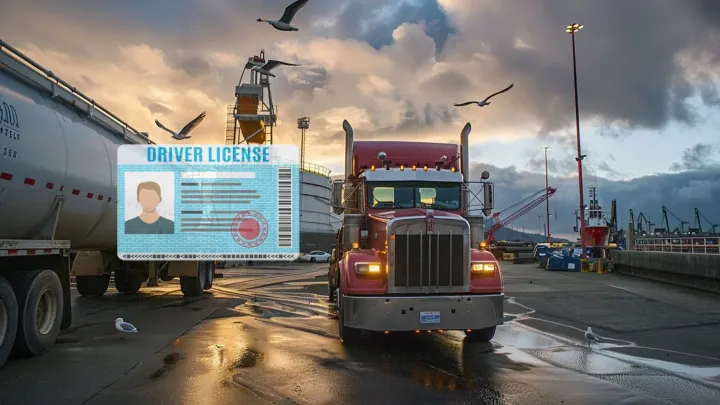
For many people, becoming a CDL truck driver means more than learning how to operate a large commercial vehicle. It can mean independence, travel, responsibility, and a career that keeps America's supply chain moving. From the first miles behind the wheel to long-haul routes across different states, life as a truck driver offers a unique combination of freedom and responsibility.
However, the life of a commercial truck driver also comes with strict regulations, long hours, safety responsibilities, and DOT compliance requirements. Understanding these responsibilities is an essential part of building a successful trucking career.
What Is a CDL Truck Driver?
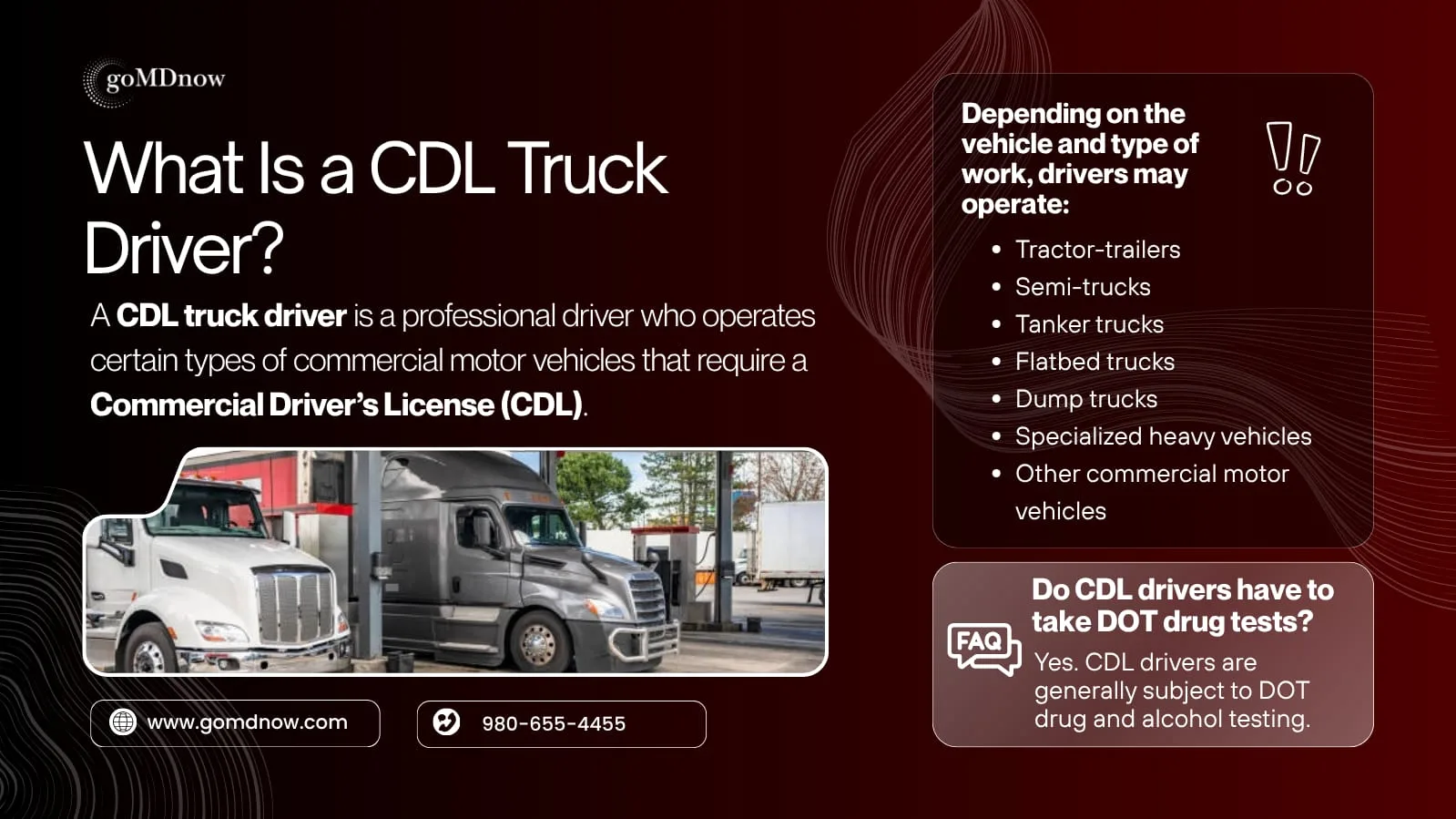
A CDL truck driver is a professional driver who operates certain types of commercial motor vehicles that require a Commercial Driver's License (CDL). Depending on the vehicle and type of work, drivers may operate:
- Tractor-trailers and semi-trucks
- Tanker trucks
- Flatbed trucks
- Dump trucks
- Specialized heavy vehicles
- Other commercial motor vehicles
Drivers may work locally, regionally, or across the country. Some return home every day, while over-the-road (OTR) truck drivers may spend several days or weeks on the road. Federal requirements apply to CDL drivers, while individual states may have additional licensing requirements. Drivers obtaining a Class A or Class B CDL for the first time must generally complete required entry-level driver training through a registered provider before taking the skills test.
The Freedom of Life on the Road
One of the biggest attractions of truck driving is the sense of independence. Instead of working behind the same desk every day, truck drivers spend much of their time on the road. Every route brings different scenery, cities, customers, weather conditions, and road situations.
- Travel through multiple states and see different parts of the country
- Work independently for long periods
- Build experience with different types of freight
- Choose from different trucking career paths (local, regional, OTR)
- Develop strong driving and logistics skills
However, freedom does not mean a lack of rules. Professional drivers must carefully manage their schedules and follow federal and state regulations.
What Does a Typical Day Look Like?
There is no single routine for every truck driver. A local driver may start early, complete several deliveries, and return home the same day. An OTR driver may have a completely different schedule. A typical day can include:
1. Pre-Trip Inspection
Before getting on the road, drivers must ensure their trucks and equipment are safe to operate — checking tires, lights, brakes, mirrors, fluids, and other critical equipment to identify potential problems before the trip begins.
2. Planning the Route
Drivers need to understand their route, delivery locations, fuel stops, parking options, weather conditions, and other potential challenges before departure.
3. Driving
Driving requires constant attention. Truck drivers must manage a large vehicle while dealing with traffic, road conditions, weather, construction zones, and other road users.
4. Loading and Unloading
Depending on the job, drivers may be responsible for inspecting cargo, securing loads, or assisting with loading and unloading operations.
5. Managing Documentation
Drivers handle delivery paperwork, electronic logging device (ELD) records, inspection reports, and other documentation related to their trips.
6. Rest and Parking
Finding safe and legal truck parking can be challenging, especially during busy periods. Drivers must also carefully manage their available driving and duty time according to Hours of Service (HOS) requirements.
Understanding Hours of Service (HOS)
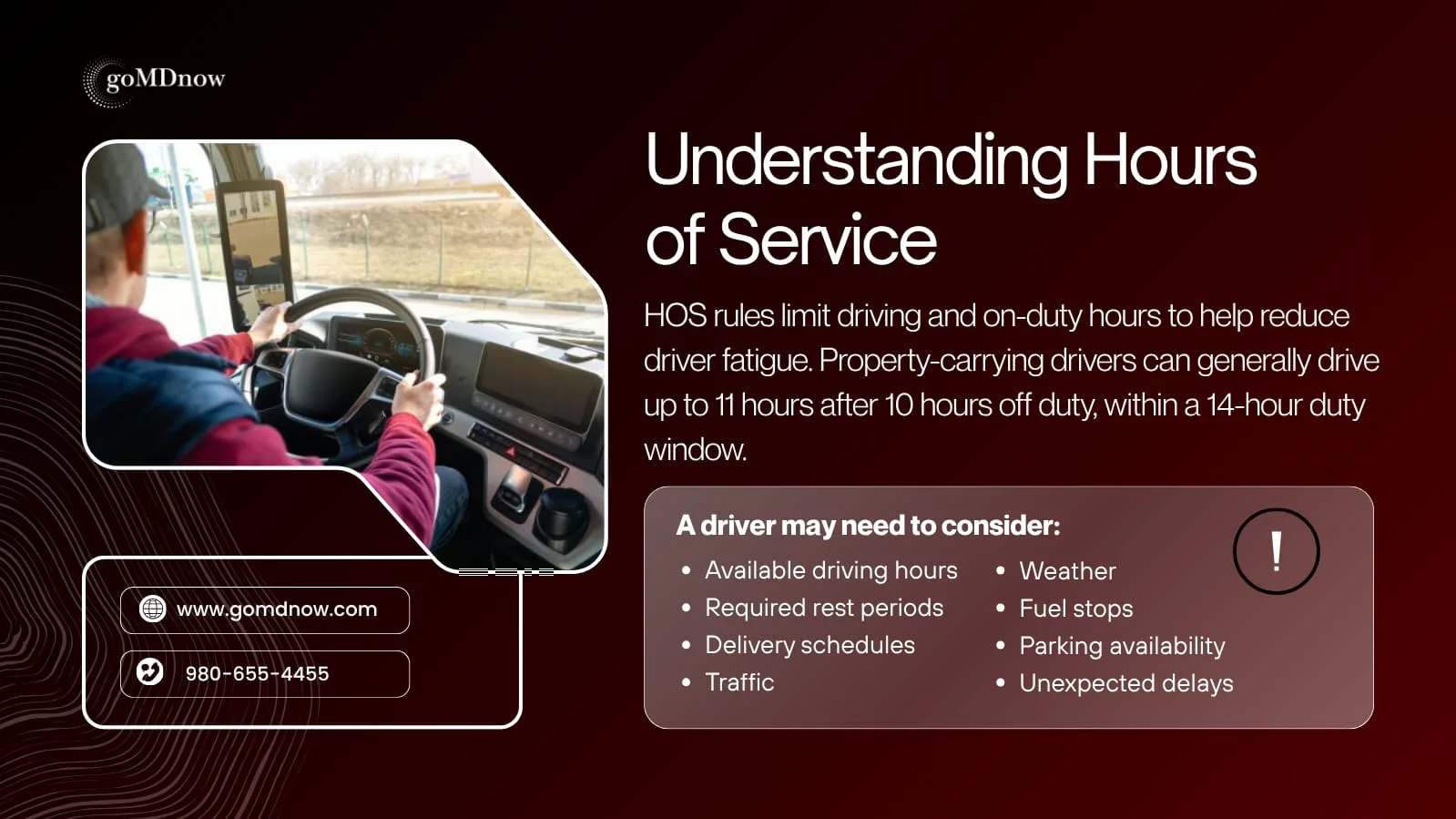
Hours of Service (HOS) regulations are designed to reduce driver fatigue by limiting driving and on-duty time. For property-carrying drivers, FMCSA generally allows:
| HOS Rule | Requirement |
|---|---|
| 11-Hour Driving Limit | Up to 11 hours of driving after 10 consecutive hours off duty |
| 14-Hour Duty Window | All driving must occur within a 14-hour window after coming on duty |
| 30-Minute Break | Required after 8 cumulative hours of driving |
| 60/70-Hour Limit | Cannot drive after 60/70 hours on duty in 7/8 consecutive days |
| 34-Hour Restart | May restart the 60/70-hour clock after 34 or more consecutive hours off duty |
Good time management is essential. A driver needs to consider available driving hours, required rest periods, delivery schedules, traffic, weather, fuel stops, parking availability, and unexpected delays.
Life as an OTR Truck Driver
Over-the-road (OTR) trucking provides opportunities to travel long distances, but it also requires drivers to spend extended periods away from home. An OTR driver may sleep in the truck's sleeper berth, eat meals on the road, and manage daily responsibilities without the routine of a traditional workplace.
This lifestyle appeals to people who enjoy traveling and working independently. However, being away from family and friends presents real challenges. Drivers must manage time away from home, irregular schedules, limited personal space, changing weather conditions, and maintaining healthy routines. Successful OTR trucking is about finding the balance between work, rest, safety, and personal life.
DOT Drug and Alcohol Testing: An Essential Part of CDL Life
Another major responsibility for CDL drivers is compliance with DOT drug and alcohol testing requirements. Generally, CDL drivers operating commercial motor vehicles subject to CDL requirements on public roads are subject to DOT testing regulations — including full-time, part-time, intermittent, backup, and certain international drivers.
DOT testing can include:
- Pre-employment testing
- Random testing
- Post-accident testing
- Reasonable-suspicion testing
- Return-to-duty testing
- Follow-up testing
DOT drug testing screens for five drug classes: marijuana, cocaine, opioids/opiates, amphetamines/methamphetamines, and PCP. A positive test or refusal can require the driver to be removed from safety-sensitive duties and complete the applicable return-to-duty process before resuming covered driving work.
The FMCSA Drug and Alcohol Clearinghouse
The FMCSA Drug and Alcohol Clearinghouse is another critical component of modern CDL compliance. The Clearinghouse contains records of certain CDL driver drug and alcohol program violations. Drivers and employers must understand how their Clearinghouse responsibilities affect a driver's eligibility to perform safety-sensitive functions.
Staying informed about drug and alcohol compliance isn't simply about passing a test — it's about understanding the rules that apply throughout an entire trucking career.
Challenges CDL Drivers Face
- Long Hours — Even with HOS regulations, trucking involves demanding workdays requiring careful time management
- Traffic and Delays — Congestion, construction, accidents, and loading delays affect delivery schedules
- Weather — Snow, heavy rain, fog, high winds, and extreme temperatures create additional driving challenges
- Finding Parking — Safe truck parking becomes especially difficult during busy periods and in high-traffic areas
- Time Away from Home — Long-haul drivers spend significant periods away from families and communities
- Maintaining Health — Eating well, sleeping enough, staying active, and maintaining routines is challenging on the road
How to Build a Successful Trucking Career
A successful CDL driving career involves far more than earning a license. Drivers can build lasting careers by developing strong professional habits:
- Follow Regulations — Understand HOS, DOT drug and alcohol testing, inspection requirements, and other applicable rules
- Prioritize Safety — Avoid unnecessary risks and maintain a defensive driving mindset
- Maintain the Truck — Regular inspections and prompt reporting of mechanical problems prevent larger issues
- Manage Time — Plan routes and stops while leaving room for unexpected delays
- Protect Your CDL — Your CDL is an essential career asset; understanding your compliance responsibilities helps protect your ability to continue performing safety-sensitive work
- Keep Learning — Regulations, technology, equipment, and industry practices evolve; staying informed helps drivers adapt
Stay Compliant With goMDnow
For CDL drivers and trucking companies, staying compliant with DOT drug and alcohol testing requirements is essential. goMDnow helps businesses and CDL drivers access DOT and non-DOT drug and alcohol testing services — including pre-employment, random, post-accident, reasonable-suspicion, return-to-duty, and follow-up testing through our nationwide network of over 20,000 collection sites.
Schedule a test online or call 980-655-4455. Stay safe. Stay compliant. Stay on the road.
Frequently Asked Questions
Q. What is a CDL truck driver?
A CDL truck driver is a professional who operates certain commercial motor vehicles that require a Commercial Driver's License. Depending on the job, drivers may work locally, regionally, or across the country.
Q. Do CDL drivers have to take DOT drug tests?
Yes. Generally, CDL drivers operating covered commercial motor vehicles on public roads are subject to DOT drug and alcohol testing requirements.
Q. How often can CDL drivers be randomly tested?
Random testing is conducted throughout the year under the employer's DOT testing program. A driver can be selected more than once, while another driver may not be selected during the same period.
Q. What happens after a positive DOT drug test?
A verified positive DOT drug test requires the driver to be removed from safety-sensitive duties and complete the applicable return-to-duty process with a DOT-qualified Substance Abuse Professional before returning to covered work.
Q. What are the main HOS limits for truck drivers?
For property-carrying drivers, the main federal HOS limits include an 11-hour driving limit after 10 consecutive hours off duty, a 14-hour duty window, a 30-minute break requirement after 8 cumulative hours of driving, and applicable 60/70-hour limits.
Related Articles
DOT Requirements for Truck Drivers: Everything You Need to Know
Who Are DOT-Covered Employees in Safety-Sensitive Positions?
How Frequently Is Random Drug and Alcohol Testing Required?
FMCSA Drug and Alcohol Clearinghouse: What Drivers Need to Know