
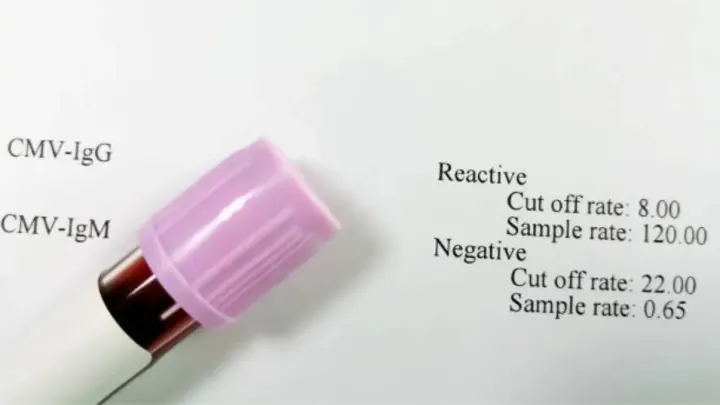
In safety-sensitive industries, compliance is not optional it is the foundation of public safety. Employees working in DOT-regulated roles, such as commercial drivers, pilots, transit operators, and pipeline workers, are responsible for protecting lives every day. To ensure these professionals are fit for duty, the U.S. Department of Transportation (DOT) enforces strict drug and alcohol testing regulations, including clearly defined cut-off levels.
Understanding DOT drug and alcohol test cut-off levels is essential for employers, CDL drivers, owner-operators, and job seekers alike. These thresholds determine whether a test result is reported as negative or positive and play a critical role in maintaining compliance, preventing accidents, and avoiding costly penalties.
This guide explains DOT drug screen levels, confirmatory testing, alcohol limits, and why these standards matter while showing how goMDnow helps simplify DOT compliance nationwide. This guide reflects current DOT and HHS drug and alcohol testing regulations under 49 CFR Part 40 and is intended for educational and compliance purposes.
What Are DOT Drug Test Cut-Off Levels?
DOT drug test cut-off levels refer to the minimum concentration of a drug or its metabolite that must be present in a biological sample most commonly urine for a test to be considered positive.
These cut-off levels are established by the U.S. Department of Health and Human Services (HHS) and enforced under 49 CFR Part 40. Employers and laboratories are required to follow these standards exactly to ensure consistency, accuracy, and fairness across all DOT-regulated testing programs.
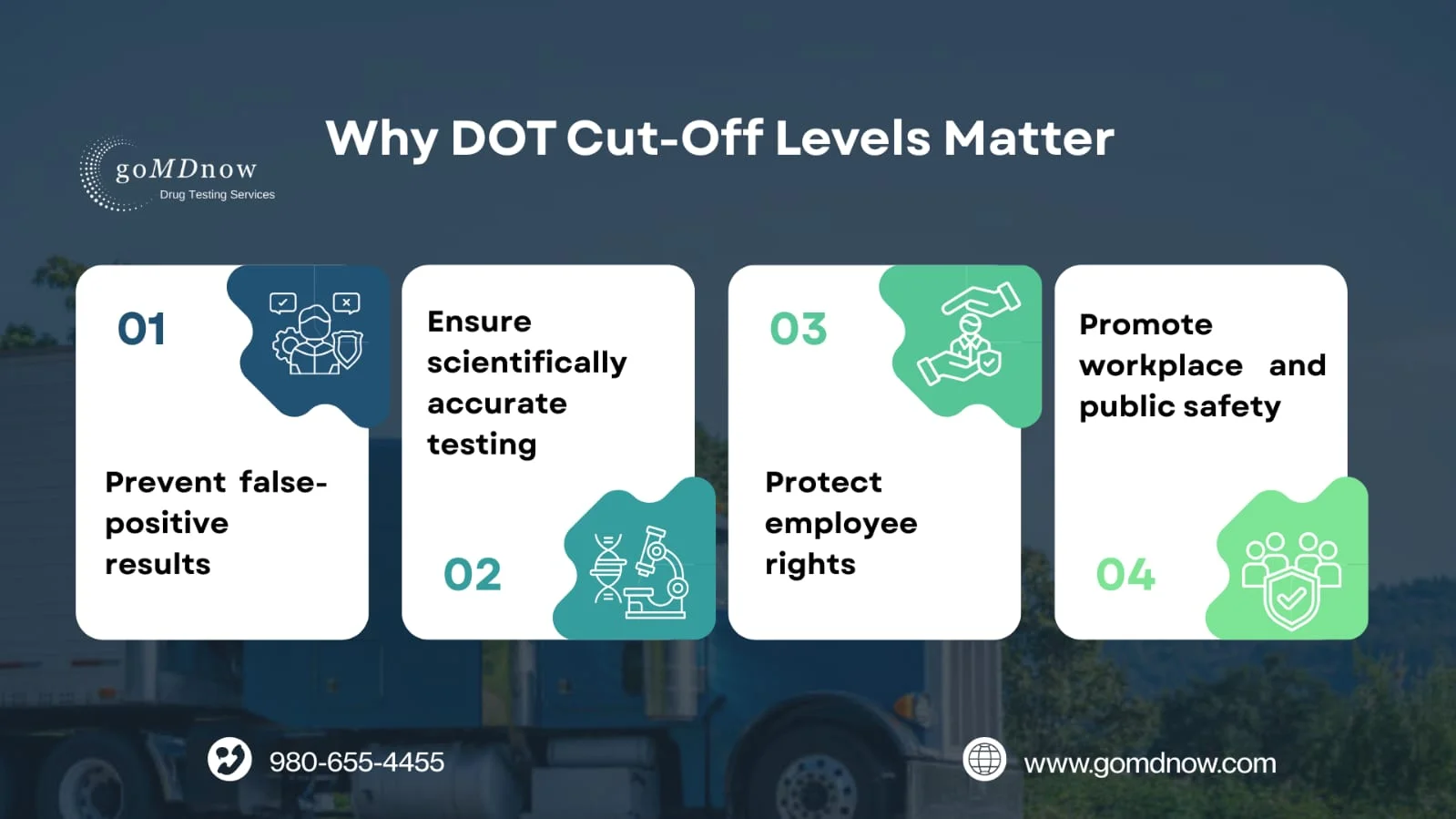
DOT cut-off levels exist to:
- Prevent false-positive results
- Ensure scientifically accurate testing
- Protect employee rights
- Promote workplace and public safety
These standards are fundamental to all DOT drug testing programs, from pre-employment to random testing.
Initial Drug Screening vs. Confirmatory Testing
DOT drug testing follows a two-step testing process to ensure reliability.
Initial Drug Screen Cut-Off Level
The initial screening test is the first stage of testing. It quickly identifies whether a sample contains drugs above a specified threshold.
- Results below the cut-off are reported as negative
- Results at or above the cut-off are sent for confirmation testing
This step efficiently eliminates negative samples while flagging potential positives for further review.
Confirmatory Drug Test Cut-Off Level
The confirmatory test uses highly accurate laboratory techniques such as Gas Chromatography/Mass Spectrometry (GC/MS) or Liquid Chromatography/Mass Spectrometry (LC/MS).
- Results below the confirmatory cut-off are reported as negative
- Results at or above the cut-off are reported as a confirmed positive
Only confirmed positives are reported to employers and reviewed by a Medical Review Officer (MRO), ensuring accuracy and allowing prescription verification when applicable. Learn more about what happens after a positive DOT test. Detection and reporting outcomes may vary based on laboratory procedures, specimen validity, and individual biological factors.
DOT Drug Testing Measurements and Reporting Rules
- Below initial cut-off > Negative
- At or above initial cut-off > Confirmation required
- Below confirmatory cut-off > Negative
- At or above confirmatory cut-off > Confirmed positive
DOT Standard Cut-Off Levels for Drugs of Abuse
The DOT 5-panel drug test screens for the following substances at these specific cut-off levels:
| Drug | Initial Cut-Off Level | Confirmatory Cut-Off Level |
|---|---|---|
| Marijuana (THC) | 50 ng/mL | 15 ng/mL |
| Cocaine | 150 ng/mL | 100 ng/mL |
| Opiates (Morphine, Codeine) | 2000 ng/mL | 2000 ng/mL |
| Amphetamines | 500 ng/mL | 250 ng/mL |
| Methamphetamine | 500 ng/mL | 250 ng/mL |
| Phencyclidine (PCP) | 25 ng/mL | 25 ng/mL |
| Benzodiazepines* | 300 ng/mL | 250 ng/mL |
*Benzodiazepines are not part of the standard DOT 5-panel test but may be included in non-DOT or expanded panels.
DOT Alcohol Testing Cut-Off Levels Explained
In addition to drug testing, the DOT mandates alcohol testing for employees performing safety-sensitive functions. Alcohol testing is conducted separately from drug testing, most commonly through a Breath Alcohol Test (BAT) administered by a trained technician in accordance with 49 CFR Part 40.
DOT Alcohol Cut-Off Levels
0.08% BAC – Regular (Non-Commercial) Drivers
For most private, non-commercial drivers in the U.S., 0.08% BAC is the legal limit.
0.04% BAC – DOT-Regulated Commercial Drivers
For commercial drivers operating under DOT regulations, a BAC of 0.04% or higher is a DOT violation requiring immediate removal from safety-sensitive duties and completion of the SAP return-to-duty process. Learn more about what happens after a DOT violation.
Why DOT Cut-Off Levels Matter
For Employers
- Ensures DOT compliance
- Reduces audit and penalty risks
- Protects company reputation
- Maintains a drug-free workplace
For Employees
- Prevents false positives
- Ensures fair testing standards
- Protects careers and livelihoods
- Provides medical review safeguards
Understanding these cut-off levels is critical for both employers managing random testing programs and employees in safety-sensitive positions.
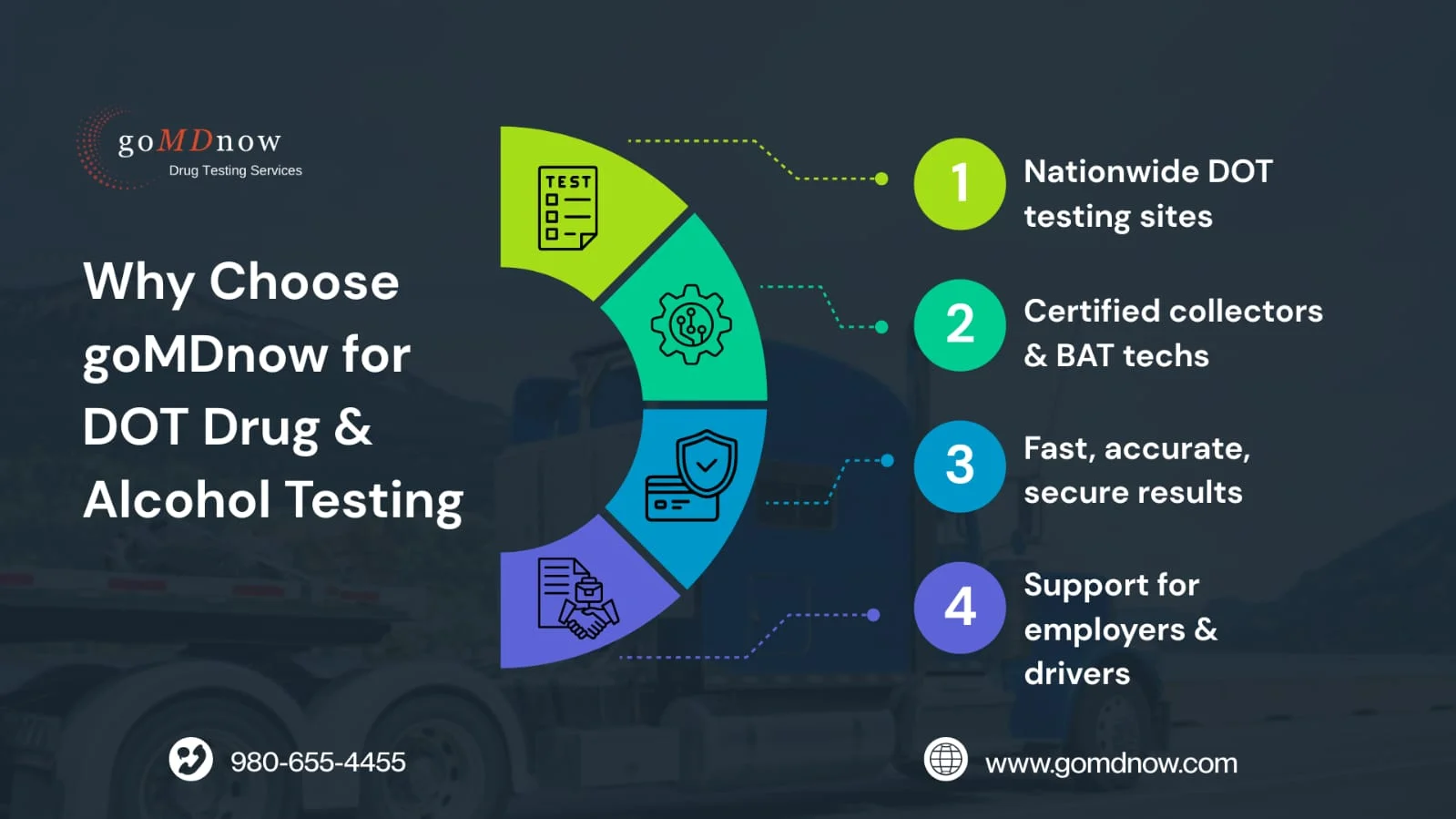
Why choose goMDnow for DOT Drug and Alcohol Testing?
goMDnow provides comprehensive DOT-compliant testing solutions designed to help employers and drivers meet federal requirements with confidence.
- Nationwide DOT-compliant testing locations
- Certified collectors and BAT technicians
- Accurate, fast, and secure results
- Full compliance with 49 CFR Part 40
- Support for employers, CDL drivers, and owner-operators
- Integration with Drug and Alcohol Clearinghouse reporting
Final Thoughts: Stay Informed, Stay Compliant, Stay Safe
Understanding DOT drug test cut-off levels and DOT alcohol cut-off levels is essential for maintaining a safe and compliant workplace. These regulations exist to protect employees, employers, and the public.
Whether you need DOT 5-panel testing, random consortium services, or help understanding positive test procedures, goMDnow is here to support your compliance journey.
Stay informed. Stay compliant. Stay drug-free.