
The Drug and Alcohol Clearinghouse is a critical compliance tool for employers operating in safety-sensitive transportation industries. If you hire or manage CDL drivers, understanding how the Clearinghouse works is not optional it is a regulatory requirement.
With real-time reporting and nationwide data access, the Clearinghouse helps employers identify drivers with drug and alcohol program violations before they operate commercial vehicles. Many transportation companies report improved operational efficiency and reduced administrative burden after integrating Clearinghouse checks into their hiring and compliance processes.
This guide explains what the Clearinghouse is, why it exists, who must report, what data is stored, and how a trusted C/TPA like goMDnow can simplify the entire process.
What Is the Drug and Alcohol Clearinghouse?
The Federal Motor Carrier Safety Administration (FMCSA) Drug and Alcohol Clearinghouse is a secure online database that tracks violations of the U.S. Department of Transportation (DOT) drug and alcohol testing program for CDL drivers.
It was created to improve transparency and prevent non-compliant drivers from moving between employers without detection.
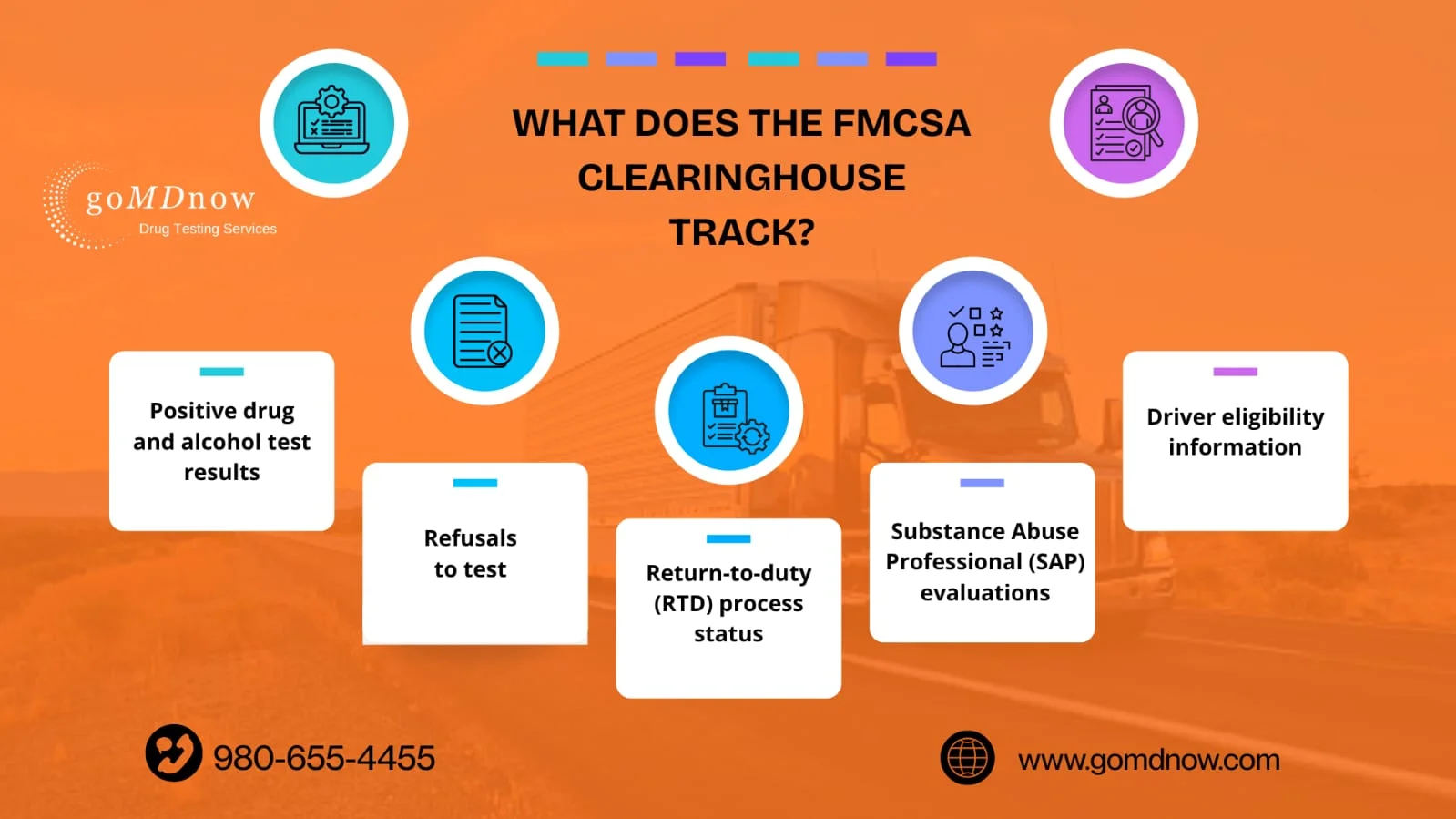
- Positive drug and alcohol test results
- Refusals to test
- Return-to-duty (RTD) process status
- Substance Abuse Professional (SAP) evaluations
- Driver eligibility information
Before the Clearinghouse, employers relied on manual record requests from previous employers. The centralized system now provides real-time compliance reporting.
What Does "Clearinghouse" Mean in DOT Compliance?
- All DOT drug and alcohol violations are recorded in one national system
- Employers must check the database before hiring CDL drivers
- Annual queries are required for current drivers
- Violations follow the driver, not the employer
This structure ensures transparency, accountability, and improved roadway safety. Understanding common Clearinghouse violations helps employers avoid costly mistakes.
What Is the Purpose of the FMCSA Clearinghouse?
The primary objective is to prevent drivers who violate DOT drug and alcohol regulations from operating commercial vehicles until completing the return-to-duty process.
- Blocks hiring of drivers with unresolved violations
- Requires pre-employment and annual queries
- Ensures SAP evaluation completion
- Provides enforcement agencies with compliance data
Who Must Comply with Clearinghouse Requirements?
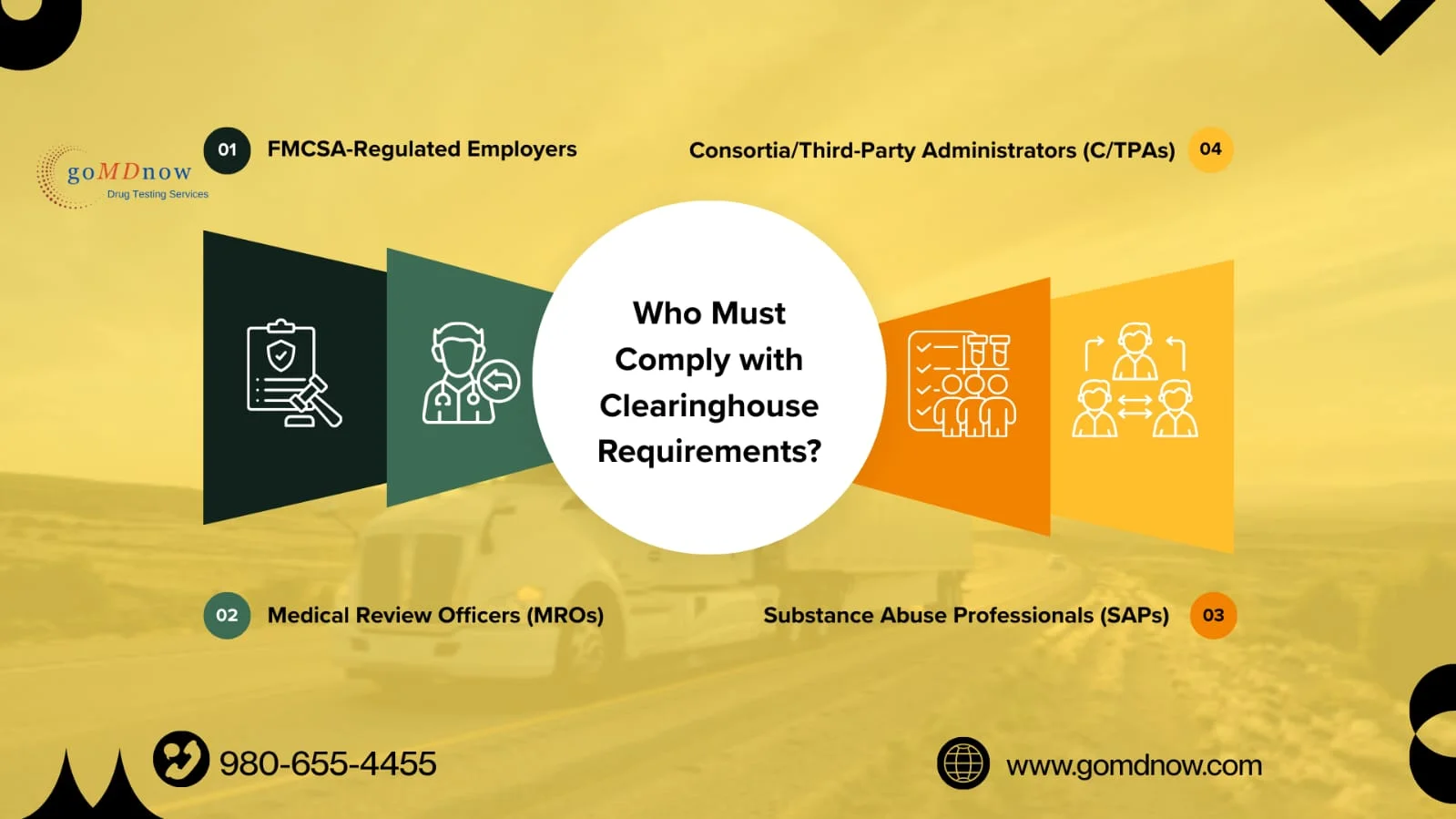
1. FMCSA-Regulated Employers
- Run pre-employment queries
- Conduct annual limited queries
- Report violations
- Ensure return-to-duty completion
Employers must maintain strict DOT compliance standards and follow all DOT regulations.
2. Medical Review Officers (MROs)
- Report verified positive results
- Report test refusals
The Medical Review Officer plays a critical role in verifying test results before Clearinghouse reporting.
3. Substance Abuse Professionals (SAPs)
- Update evaluation completion
- Report treatment progress
- Confirm return-to-duty eligibility
4. Consortia/Third-Party Administrators (C/TPAs)
- Manage employer queries
- Report violations
- Monitor compliance
Many employers choose to work with a random testing consortium to manage their entire drug testing program, including Clearinghouse compliance.
Failure to comply may result in penalties, fines, and operational consequences. Understanding DOT violations and their consequences is essential for all employers.
What Information Is Stored?
- Positive drug test results — including substances like amphetamines, methamphetamine, cocaine, and marijuana
- Alcohol confirmation tests ≥ 0.04 BAC — measured through breath alcohol testing
- Refusals to test
- Actual knowledge violations
- Return-to-duty status
- SAP evaluation status
- Employer reporting violations
- Driver consent records
Records remain for a minimum of five years or until the return-to-duty process is completed. All tests follow strict cutoff levels as defined by DOT regulations.
Why the Clearinghouse Matters for Employers
- Improved regulatory compliance
- Reduced administrative workload
- Enhanced roadway safety
- Risk mitigation against negligent hiring claims
- Greater operational efficiency
Employers must understand their responsibilities as a Designated Employer Representative when managing Clearinghouse compliance.
The Return-to-Duty (RTD) Process
- Violation reported to the Clearinghouse
- SAP evaluation completed
- Treatment or education requirements fulfilled
- Return-to-duty test passed
- Follow-up testing plan implemented
Drivers cannot perform safety-sensitive duties until all required steps are completed and documented. Learn more about what happens after failing a DOT test.
The follow-up testing process is a critical component of driver rehabilitation and typically requires a minimum of six unannounced tests over 12 months.
How goMDnow Simplifies Compliance
- Clearinghouse registration assistance
- Pre-employment and annual queries
- Accurate violation reporting
- Return-to-duty monitoring
- Audit-ready documentation
- Ongoing compliance oversight
We provide comprehensive support for all aspects of DOT drug testing, including DOT 5-panel testing, random testing programs, and chain of custody management.
Our services ensure compliance with all DOT consortium requirements, and we maintain partnerships with SAMHSA-certified laboratories nationwide.
How to Register goMDnow as Your C/TPA
- Create an employer account in the Clearinghouse system
- Select "Designate Consortium/Third Party Administrator"
- Choose goMDnow as your C/TPA
For detailed guidance on setting up your account and understanding the system, visit our comprehensive C/TPA compliance guide.
Additional Clearinghouse Considerations
Employers should also be aware of related testing requirements and procedures:
- Reasonable suspicion testing — when supervisor observes signs of impairment
- Post-accident testing — required after certain incidents
- Understanding test results — proper interpretation and MRO review
- Observed collections — required for return-to-duty and follow-up tests
It's also important to understand related topics such as prescription drug use and how it's handled during the MRO review process.
Frequently Asked Questions
What is the Drug and Alcohol Clearinghouse?
A secure database tracking CDL driver DOT drug and alcohol violations.
Is registration mandatory?
Yes. Employers must register, run required queries, and report violations.
What happens after a violation?
The driver must complete the SAP evaluation and RTD process before resuming safety-sensitive duties.
How long do records stay in the Clearinghouse?
A minimum of five years, or until the return-to-duty process is fully completed and documented.
What tests are included in DOT drug screening?
The DOT uses a 5-panel test screening for marijuana, cocaine, amphetamines, opiates, and PCP. Learn more about DOT vs non-DOT testing differences.
How much does DOT testing cost?
Costs vary by test type and provider. See our guide on DOT drug test costs for detailed pricing information.
How long does it take to get test results?
Results timing depends on test type and whether confirmation is needed. Read our article on drug test result timing.
Final Thoughts
The FMCSA Drug and Alcohol Clearinghouse strengthens safety, accountability, and regulatory oversight in commercial transportation. For DOT-regulated employers, compliance is mandatory. Proper management improves safety culture, operational efficiency, and legal protection.
Partnering with a knowledgeable C/TPA like goMDnow ensures your Clearinghouse processes remain compliant and up to date. We provide comprehensive support for full-service drug testing, from initial queries to return-to-duty completion.
Ready to streamline your DOT compliance? Sign up for our consortium today and let goMDnow handle your Clearinghouse compliance, random testing, and all DOT drug and alcohol requirements.